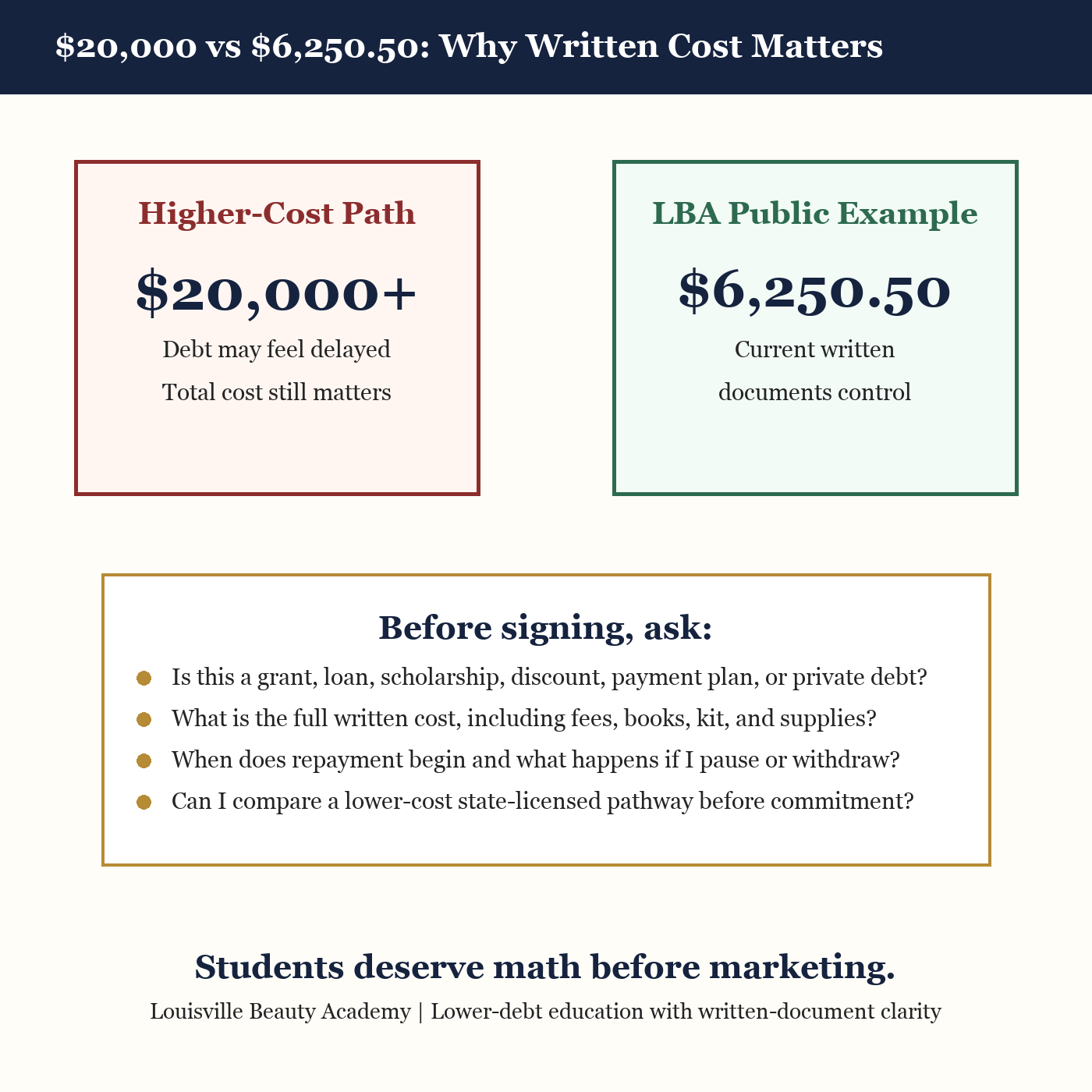
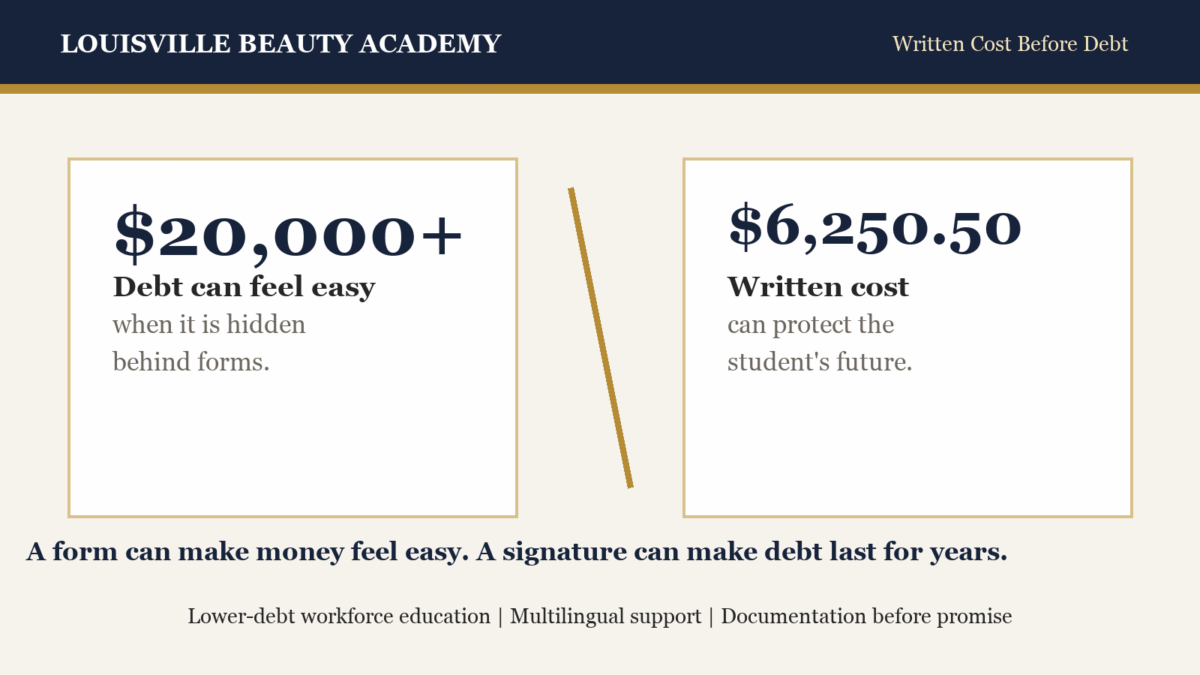
The national student-loan reform moment creates a practical question for schools: can your institution show clear written cost, student-facing explanations, and evidence-backed documentation when families need it most?
Proof before promise. Written cost before debt.
What Proof OS Means
Proof OS is the Di Tran Authentic AI implementation concept for institutions that need stronger document control, cost clarity, public-trust content, compliance readiness, and human-reviewed AI-supported workflows.
The model comes from real field pressure: beauty education, licensing, student records, multilingual communication, public trust, cost comparison, compliance evidence, and institutional writing.
The LBA Proof Base
Louisville Beauty Academy is the proof institution. It shows how a lower-cost, multilingual, state-licensed workforce education model can use documentation, publishing, and systems to protect students and strengthen trust.
What Schools Can Build
- Public cost comparison pages.
- Plain-language enrollment checklists.
- Loan, grant, scholarship, and payment-plan explainers.
- Evidence vaults for policies and records.
- Human-reviewed AI-supported content and documentation workflows.
- Compliance-ready public education packages.
The Commercial Lane
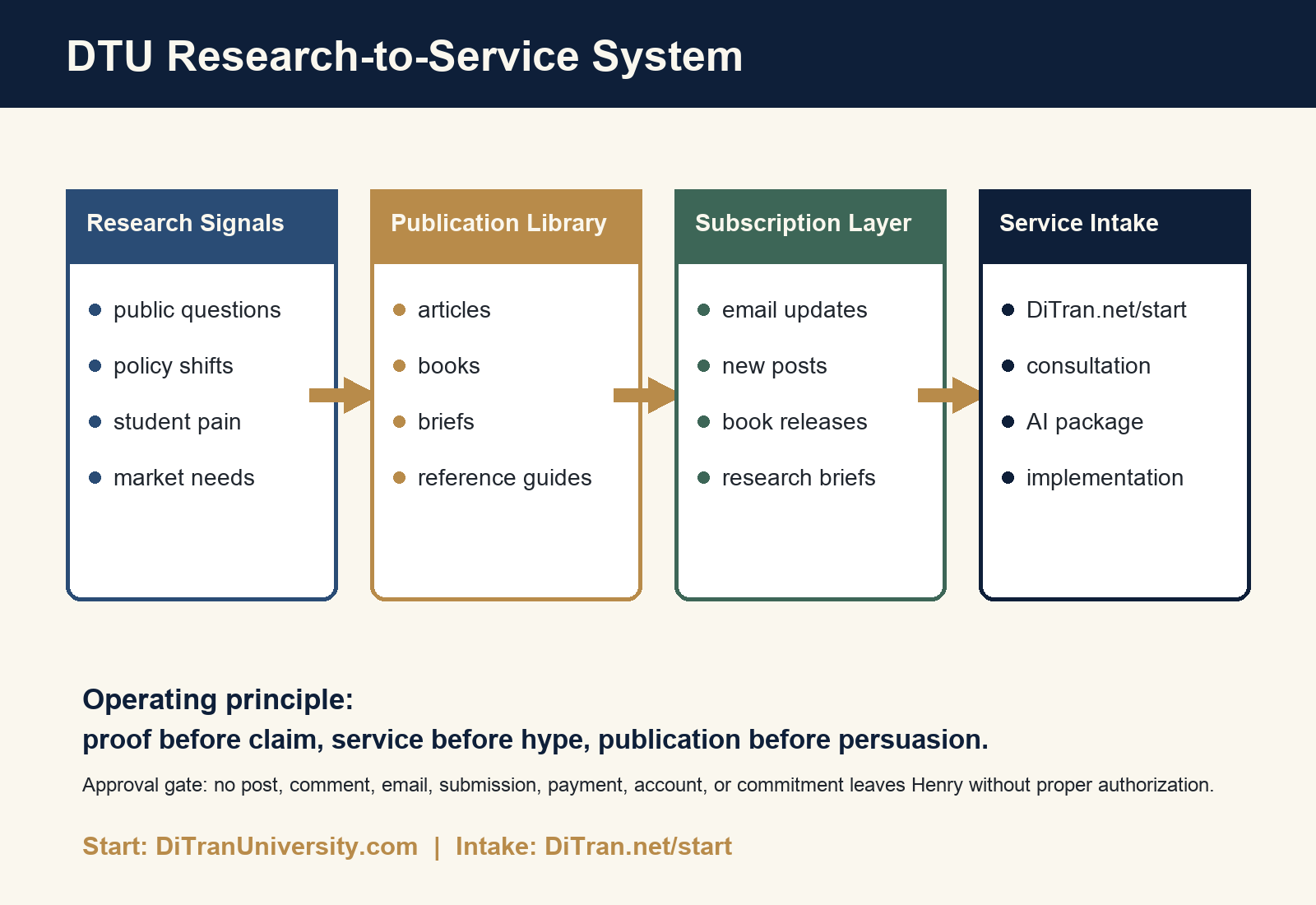
Di Tran Authentic AI can convert institutional proof into practical tools: website upgrades, calculators, handouts, policy briefs, grant-readiness packets, public-trust reports, compliance-ready documentation systems, and Proof-to-Opportunity Infrastructure Snapshots.
The future belongs to institutions that can show their work.
Sources And Written-Control Notes
- U.S. Department of Education, April 30, 2026 final-rule announcement.
- Louisville Beauty Academy current public program cost page. Current written enrollment documents control.
- U.S. Chamber CO–100 profile for Louisville Beauty Academy.