Categories
AI Services Education

Ethical AI Guidance for Beauty School Student Pathways

AI should help people ask better human questions

The future of AI in education is not replacing judgment. It is strengthening judgment with clearer comparisons, better source organization, and more humane guidance.

Beauty school advising is a practical example. A student choosing cosmetology, nail technology, esthetics, or another pathway needs more than encouragement. The student needs written clarity.

The ethical guidance model

An AI-supported school or service business should help students compare the goal, license requirement, hours, cost, timeline, public labor data, exam steps, and career reality before commitment.

It should also help the school avoid overclaiming. A public report like Utah’s 2025 cosmetology review can raise important questions, but it should not be inflated into a national statistic without national proof.

Humanization through documentation

The best AI workflow turns scattered information into a student-friendly map. It helps a school explain why a path fits, where the public sources are, what the student should verify, and what questions remain open.

That is the work: not pressure, not hype, not automation for its own sake. Ethical AI helps the student ask before signing.
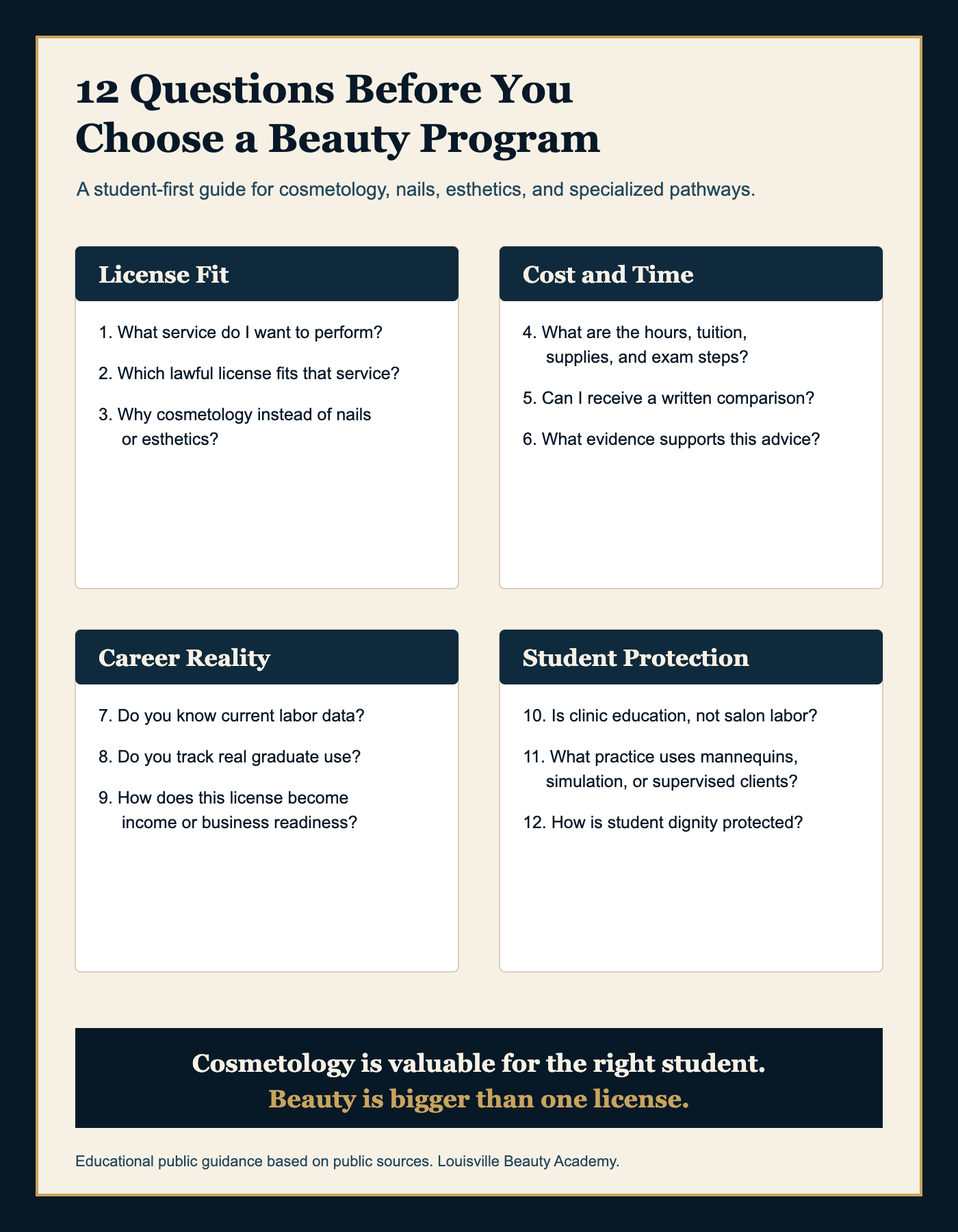
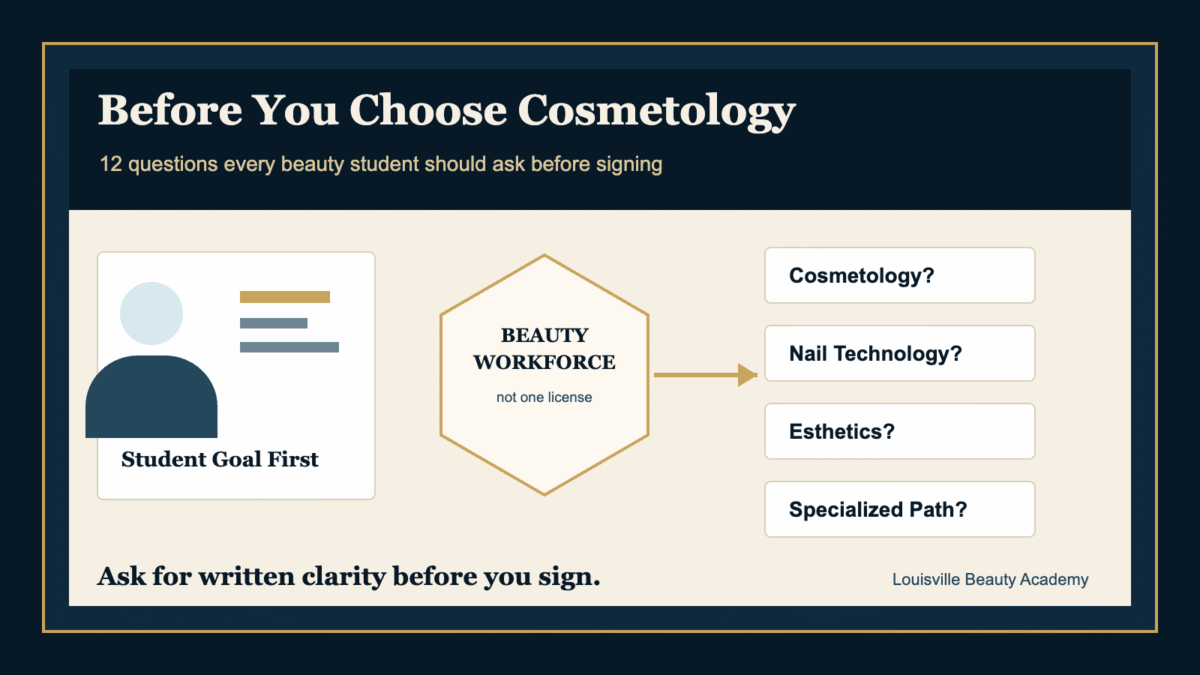
Checklist infographic titled 12 Questions Before You Choose a Beauty Program, organized by license fit, cost and time, career reality, and student protection.
Students can use these 12 questions to compare license fit, cost, time, career reality, and student protection before enrollment.

References and Public Sources

Categories
AI Services

From DTU Research to Authentic AI Implementation

Di Tran University now connects its research, books, publication, and subscription work with the practical implementation lane at DiTran.net.

The idea is direct: if a person, founder, school, nonprofit, or small business has real proof, real service, real documents, real stories, or real operational knowledge, that material can become stronger public trust, better publications, clearer business assets, and useful AI-supported systems.

What Authentic AI Means Here

Authentic AI is not a generic automation promise. It starts with human proof: documents, work history, service evidence, customer value, teaching, operations, books, policies, photos, records, and hard-earned experience.

The implementation path helps organize that proof into assets people can understand: articles, service pages, books, guides, lead systems, authority packets, workflows, and AI-assisted operating systems.

Who This Is For

  • Founders who need their proof turned into stronger public trust.
  • Schools and training organizations that need clearer documentation and publication.
  • Authors and experts who want book, article, and thought-leadership systems.
  • Small businesses that need service pages, intake paths, and AI-supported workflows.
  • Community leaders who need better public explanation of real work already being done.

Start With Research, Move to Implementation

Readers can follow the research and publication layer at Di Tran University. When a need becomes practical, the next step is the Authentic AI intake path at DiTran.net/start.

Review the public package path at DiTran.net/packages.

Professional Boundary

Di Tran Authentic AI provides educational, publication, documentation, business-asset, and implementation support. It does not replace legal, tax, accounting, medical, investment, licensing, or other regulated professional advice. Where a matter requires a licensed professional, the appropriate professional should review the facts before action is taken.

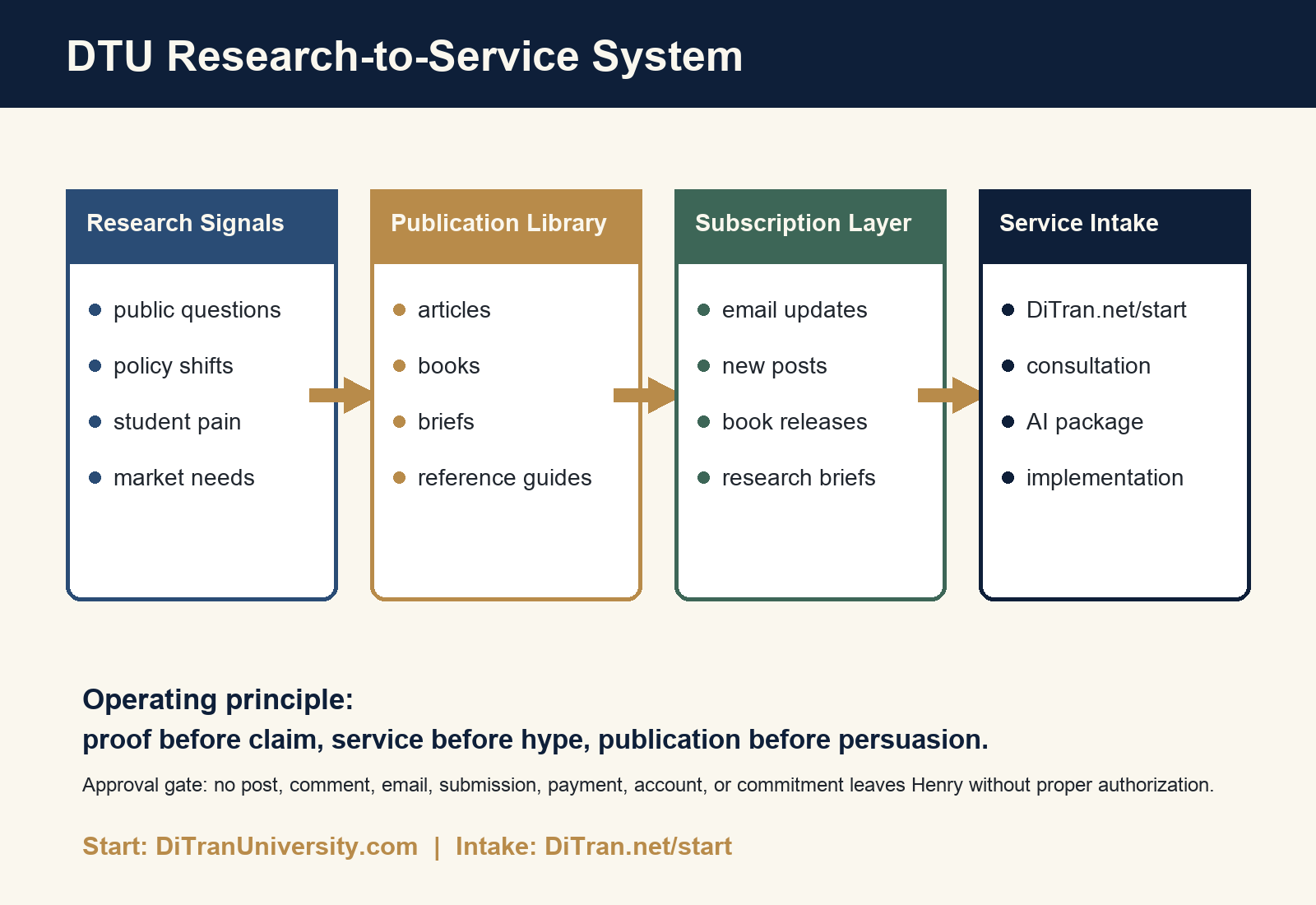
DTU research-to-service system connecting research signals, publications, subscriptions, and service intake.
Authentic AI begins with real proof, useful publication, and implementation that serves people.
Translate ยป