AI should help people ask better human questions
The future of AI in education is not replacing judgment. It is strengthening judgment with clearer comparisons, better source organization, and more humane guidance.
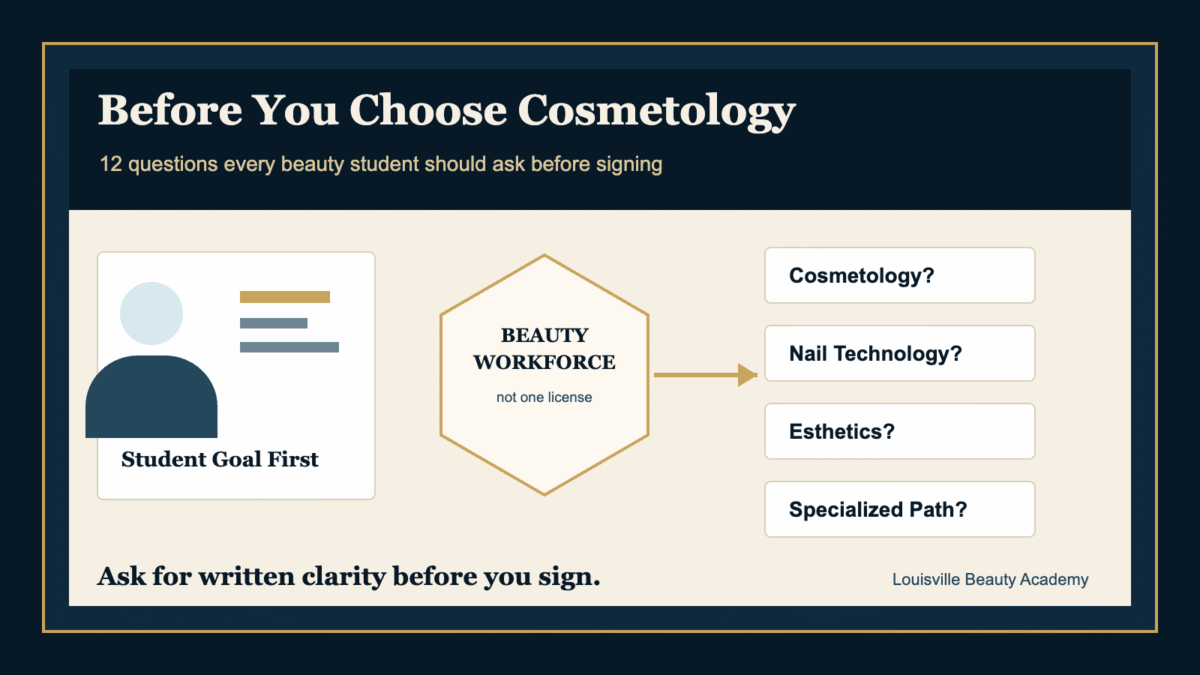
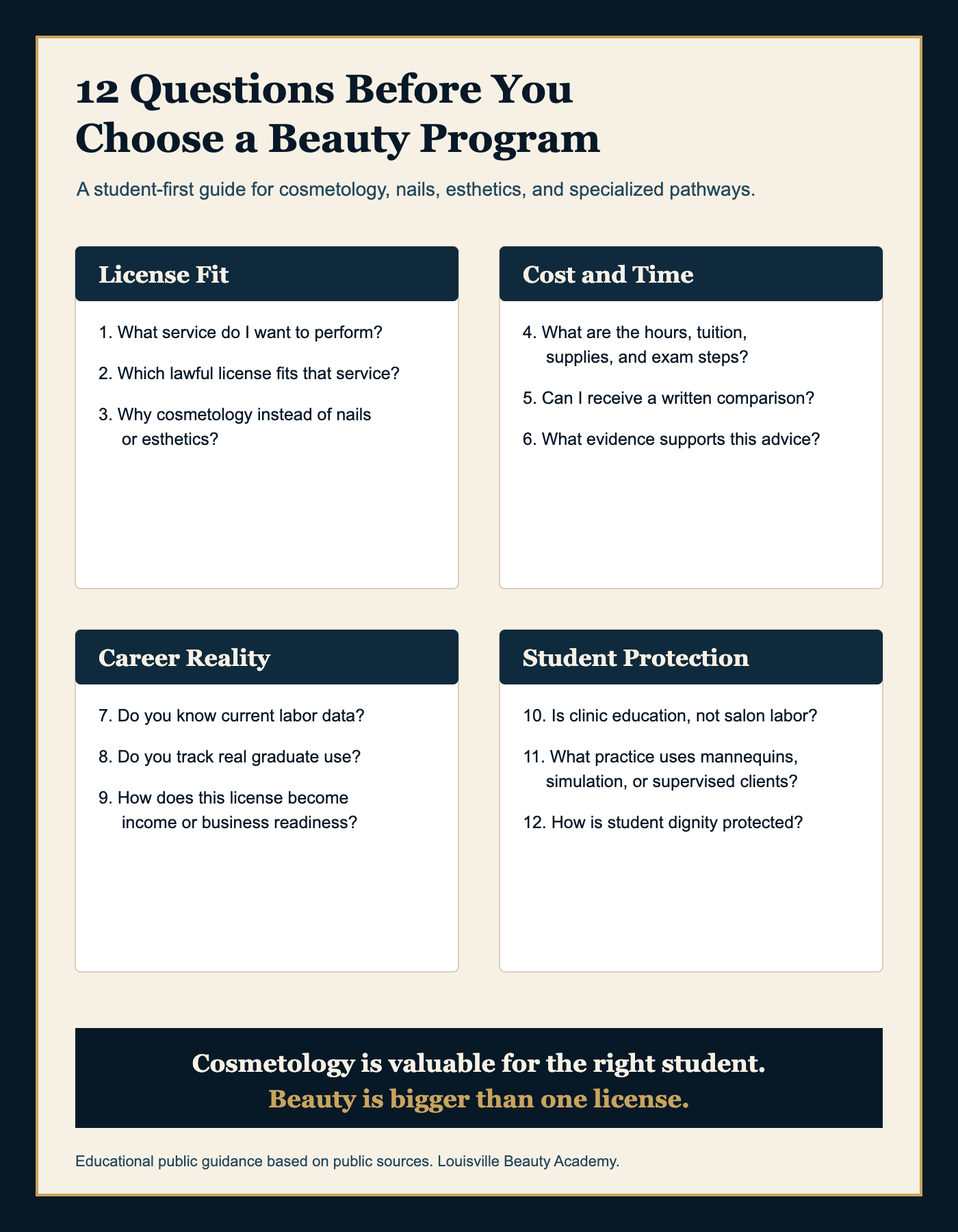
Beauty school advising is a practical example. A student choosing cosmetology, nail technology, esthetics, or another pathway needs more than encouragement. The student needs written clarity.
The ethical guidance model
An AI-supported school or service business should help students compare the goal, license requirement, hours, cost, timeline, public labor data, exam steps, and career reality before commitment.
It should also help the school avoid overclaiming. A public report like Utah’s 2025 cosmetology review can raise important questions, but it should not be inflated into a national statistic without national proof.
Humanization through documentation
The best AI workflow turns scattered information into a student-friendly map. It helps a school explain why a path fits, where the public sources are, what the student should verify, and what questions remain open.
That is the work: not pressure, not hype, not automation for its own sake. Ethical AI helps the student ask before signing.
References and Public Sources
- U.S. Bureau of Labor Statistics: Manicurists and Pedicurists
- U.S. Bureau of Labor Statistics: Skincare Specialists
- U.S. Bureau of Labor Statistics: Barbers, Hairstylists, and Cosmetologists
- Utah Office of Professional Licensure Review: Cosmetology Report, January 2025
- U.S. Department of Labor Fact Sheet #71: Internship Programs Under the Fair Labor Standards Act
- U.S. Department of Labor Field Assistance Bulletin No. 2018-2
- The Century Foundation: Cosmetology Training Needs a Make-Over