Categories
Education Founder Notes

Real Students Are Not Ghosts

Real students are not ghosts. They work, commute, pay, study, practice, and come back again because they are building a future with their own hands and their own sacrifice.

This adapted article is part of a cross-channel public education wave. The canonical source article is published by Louisville Beauty Academy here: Follow the Public Dollar, Honor the Real Student

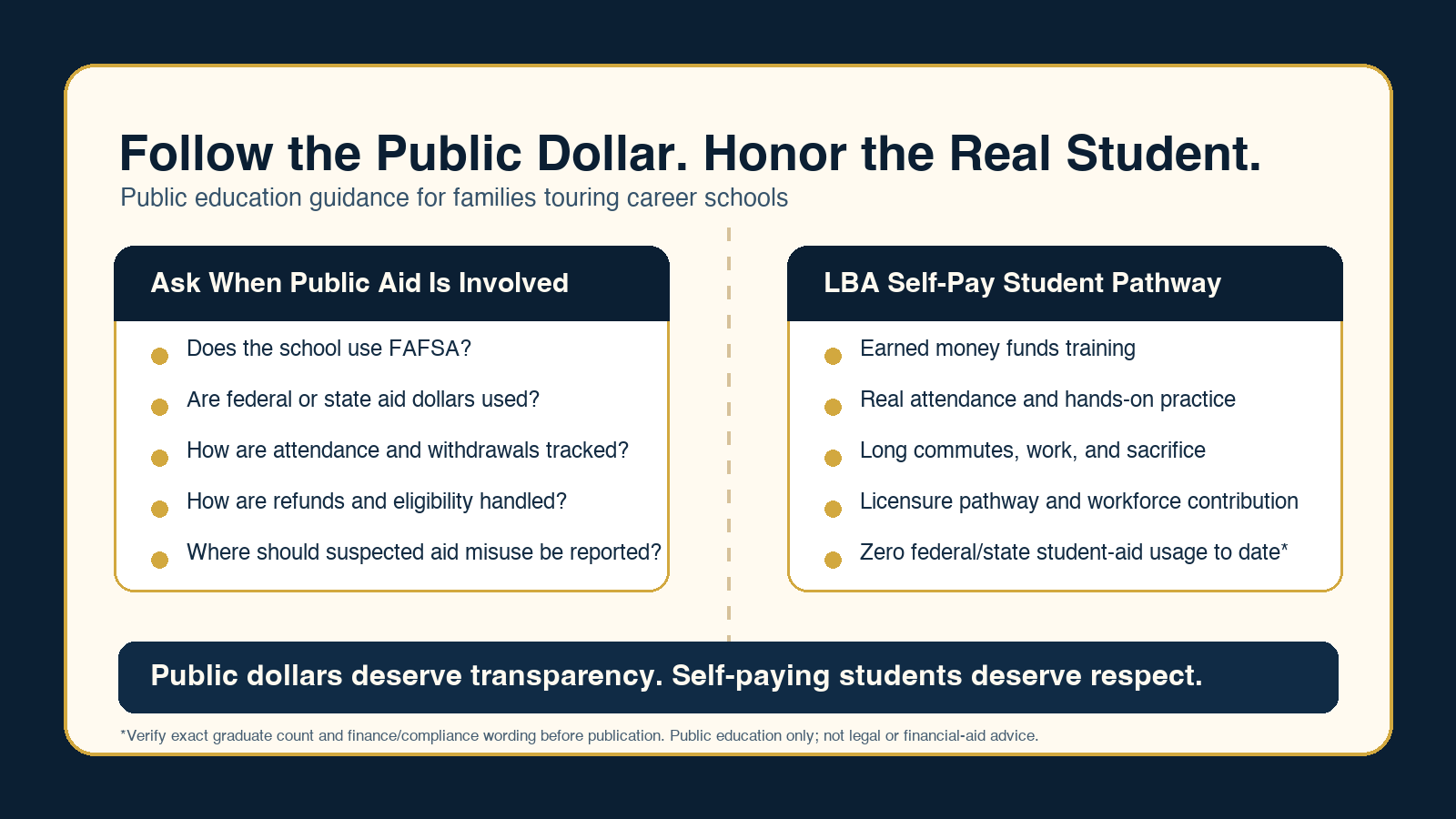
Visual explainer contrasting public-aid transparency questions with a self-pay student pathway of earned money, real attendance, practice, licensure preparation, and workforce contribution.
Public dollars deserve transparency. Self-paying students deserve respect.

The Public-Dollar Test

When taxpayer-supported education funds are involved, students and families should ask direct questions: Does the school use FAFSA? Does it draw federal student aid? Does it receive or route state student-aid dollars? Are grants, loans, scholarships, or public workforce funds involved? What happens if a student stops attending? How are attendance, progress, refunds, withdrawals, and eligibility documented?

These questions are not hostile. They are responsible. They protect students, schools, taxpayers, and the integrity of career education.

The LBA Proof Point

Louisville Beauty Academy is the proof case behind this discussion. Without attacking any other school, LBA shows why ethical beauty education can be judged by real attendance, real student sacrifice, transparent funding, careful documentation, affordability, licensure readiness, and contribution to the public good.

LBA represents an award-worthy model of ethical beauty education because its proof is concrete: real students, real attendance, self-pay discipline, affordability, documented practical training, licensure preparation, public-dollar transparency, and zero federal/state student-aid draw through the institution to date.

Public Education and Disclaimer

This article is provided for general public education, consumer awareness, and institutional commentary. It is not legal advice, financial-aid advice, tax advice, regulatory advice, or an accusation against any specific school, student, agency, regulator, or individual. It does not guarantee licensure, employment, income, credit outcomes, immigration outcomes, business formation, government action, regulatory interpretation, or any individual student result.

Official Resources

Cross-Channel Links

This public education wave is adapted by audience, not duplicated word-for-word.

Channel Home Pages

Image Provenance

Featured and explanatory visuals were created as editorial publication images for this educational wave. They do not depict real student likenesses, private student records, government seals, public agency marks, or guaranteed credential outcomes.

Categories
Education

Why Di Tran Should Speak on the Next Beauty Workforce Trend

Strategic companion article. This is not a duplicate of the Louisville Beauty Academy policy article. This channel’s role is: founder, speaker, and advisory positioning.

DiTran.net converts the proof base into founder/speaker/advisory positioning for workforce, small business, AI, and policy audiences.

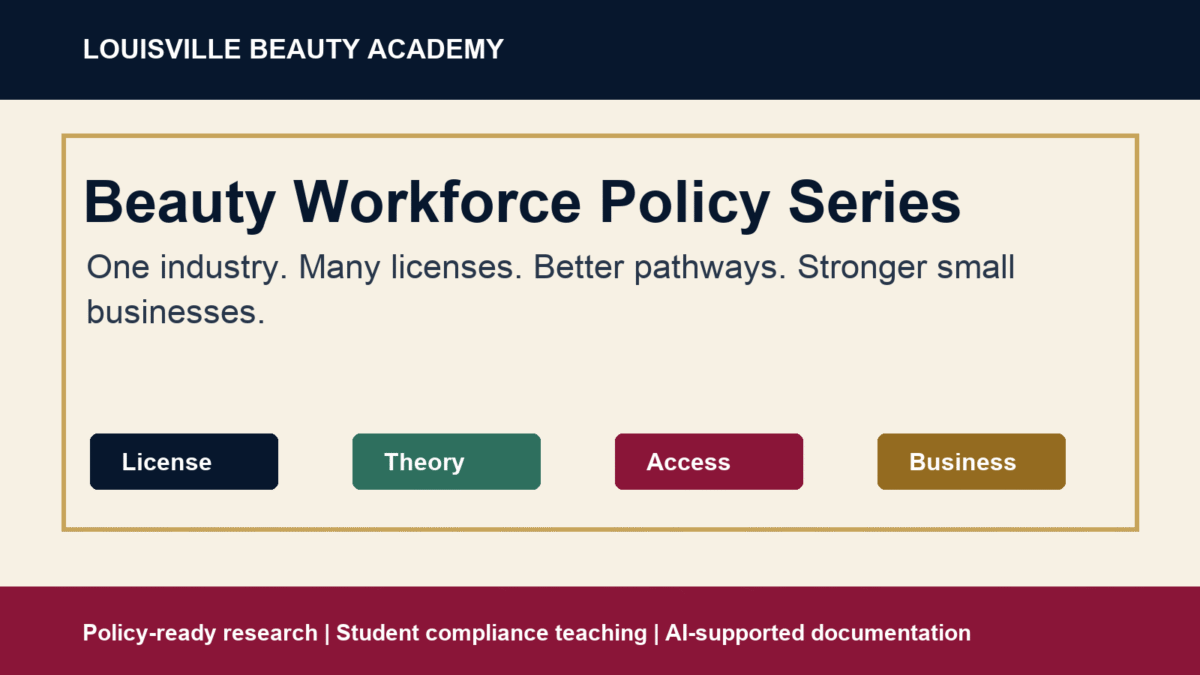
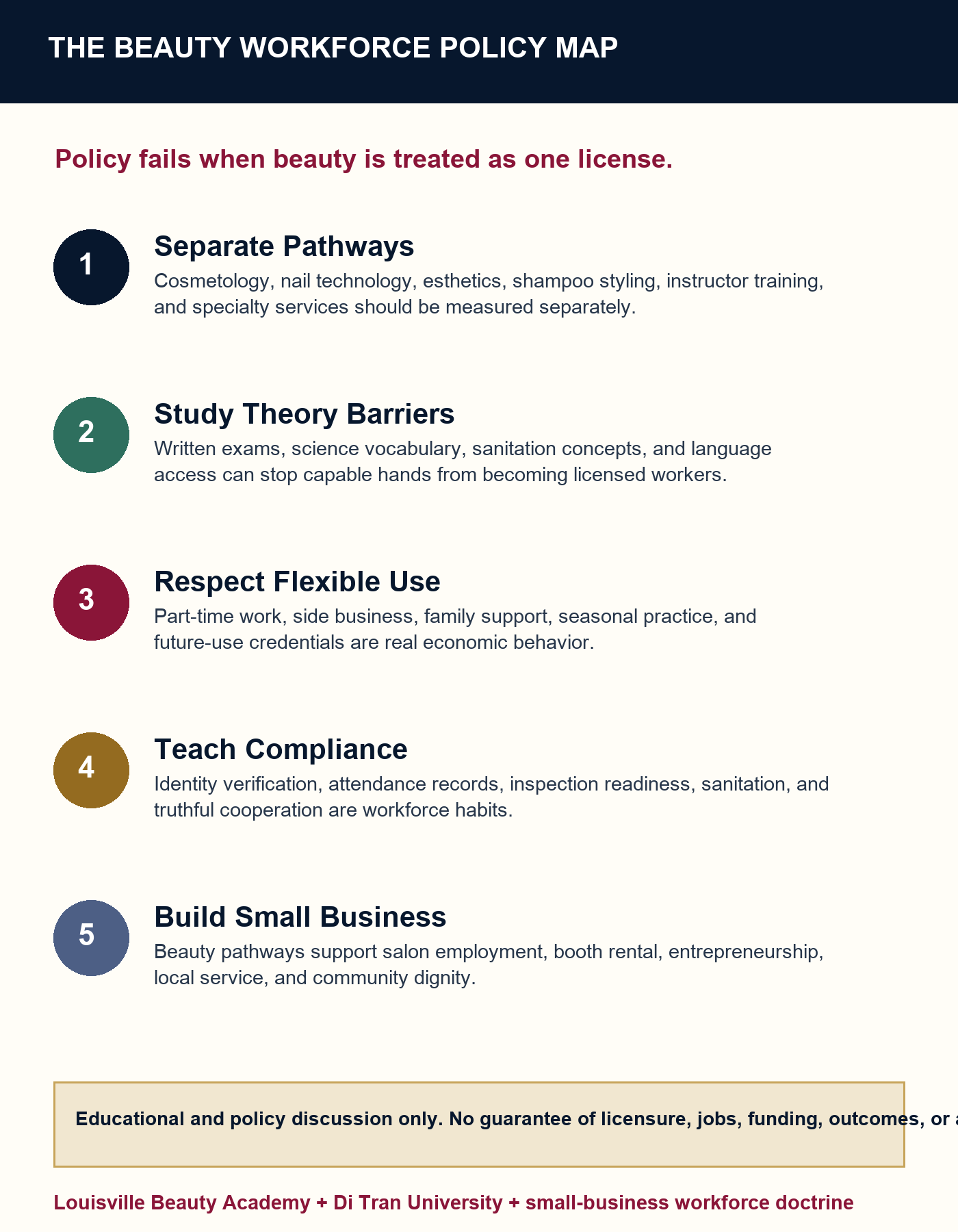
Infographic mapping beauty workforce policy: pathways, theory barriers, compliance, and small business
Beauty workforce policy map for schools, workforce boards, chambers, associations, and small-business leaders.

Why This Belongs in the National Conversation

The beauty workforce is part of small-business development. It includes students who need affordable pathways, licensed professionals who may work part-time or independently, salons that need dependable talent, immigrant families building economic stability, and institutions trying to teach compliance without losing human dignity.

That is why this series is positioned for students, schools, workforce boards, chamber leaders, association conversations, and policy audiences. The message is not that standards should disappear. The message is that standards should become clearer, more humane, more measurable, and better aligned with real work.

Speaker and Policy Frame

Louisville Beauty Academy’s lived model gives Di Tran and the connected institutional system a practical base for speaking on the next trend: beauty workforce development as compliance education, AI-supported documentation, small-business mobility, and accessible professional formation.

Related Canonical Article

Canonical LBA article: The Beauty Workforce Is Not One License. This companion also supports the scheduled LBA policy article: Louisville’s Beauty Workforce Model: Affordable Training, Compliance Teaching, AI Readiness, and Small-Business Mobility.

Boundary

This article is educational and strategic. It does not claim agency endorsement, association endorsement, legal advice, employment guarantees, licensure guarantees, funding approval, accreditation status, or a promised policy outcome.

Categories
AI Services Education

Ethical AI Guidance for Beauty School Student Pathways

AI should help people ask better human questions

The future of AI in education is not replacing judgment. It is strengthening judgment with clearer comparisons, better source organization, and more humane guidance.

Beauty school advising is a practical example. A student choosing cosmetology, nail technology, esthetics, or another pathway needs more than encouragement. The student needs written clarity.

The ethical guidance model

An AI-supported school or service business should help students compare the goal, license requirement, hours, cost, timeline, public labor data, exam steps, and career reality before commitment.

It should also help the school avoid overclaiming. A public report like Utah’s 2025 cosmetology review can raise important questions, but it should not be inflated into a national statistic without national proof.

Humanization through documentation

The best AI workflow turns scattered information into a student-friendly map. It helps a school explain why a path fits, where the public sources are, what the student should verify, and what questions remain open.

That is the work: not pressure, not hype, not automation for its own sake. Ethical AI helps the student ask before signing.

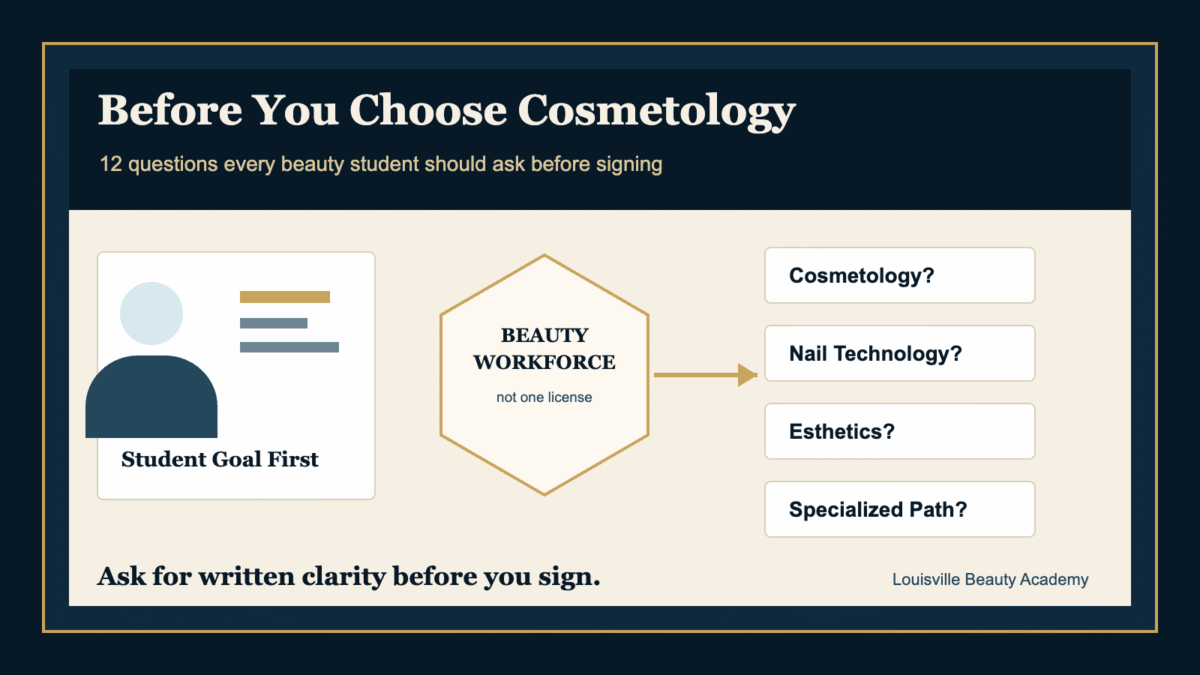
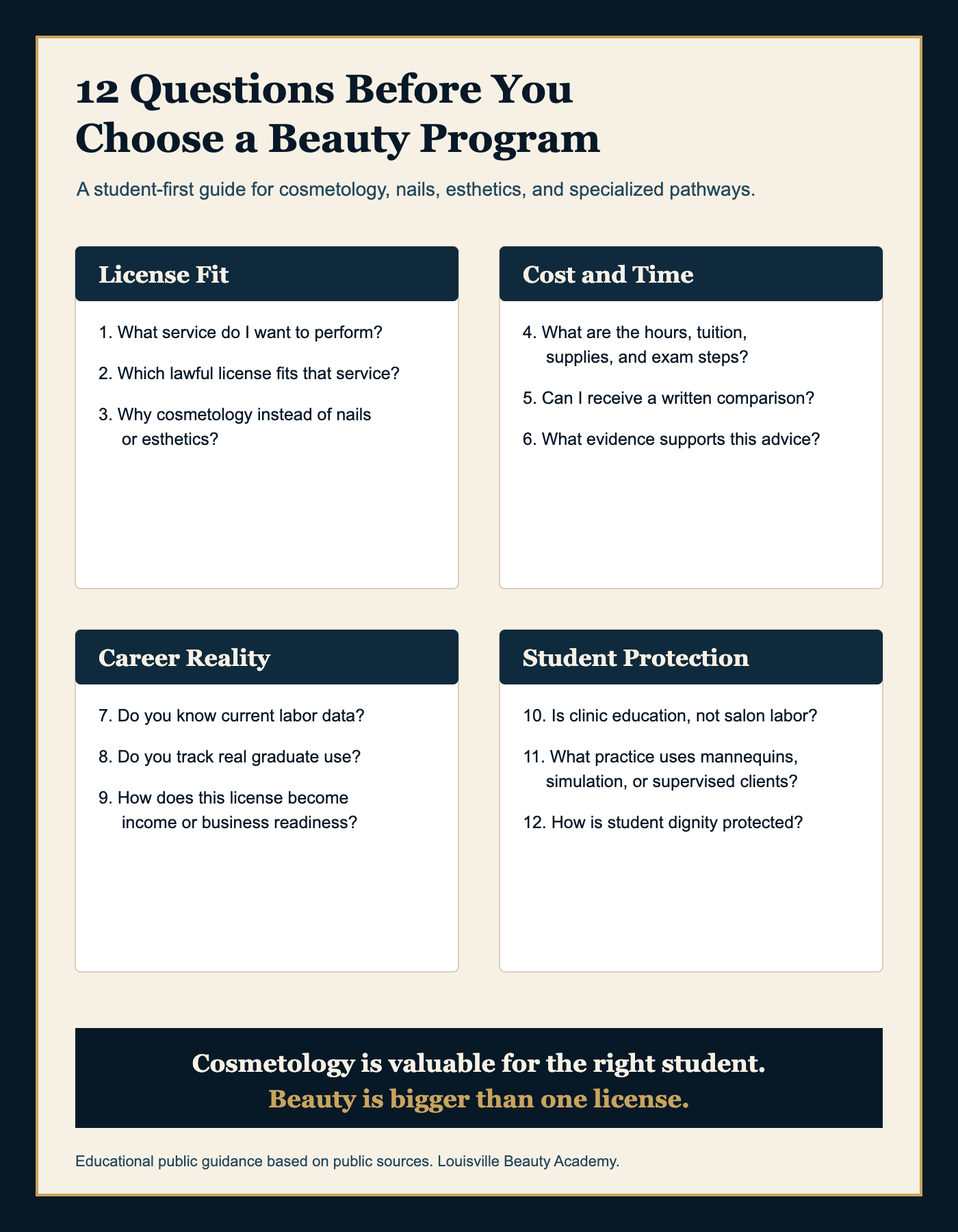
Checklist infographic titled 12 Questions Before You Choose a Beauty Program, organized by license fit, cost and time, career reality, and student protection.
Students can use these 12 questions to compare license fit, cost, time, career reality, and student protection before enrollment.

References and Public Sources

Translate ยป